When your hearing feels dampened, it can impact your daily routine and leave you feeling withdrawn from your surroundings. Many people immediately fear they’re experiencing permanent hearing loss when, in reality, the culprit may be something much more basic: earwax buildup.
Differentiating between a wax impaction and actual hearing impairment is crucial for determining if you need a simple removal or a formal audiological exam. If you’re experiencing dull hearing, remain calm. A consultation can help you uncover the source of it, but in the interim, here’s what you need to know about earwax buildup (also referred to as earwax blockage) vs. hearing loss.
How to Recognize a Wax Blockage
Your canals produce wax as a natural defense process to preserve integrity and keep debris away from the tympanic membrane. Clinical complications only develop when the wax fails to migrate out of the ear, leading to a substantial accumulation or impaction.
Symptoms of a blockage often feature:
- Progressive or sudden dampened hearing
- A sensation of pressure or blockage in the ear
- Physical sensitivity or localized aching in the ear
- Persistent humming or ringing sounds
- Moments of sharper hearing after a yawn or eating
Because obstructions are physical, they commonly impact just one ear at a time rather than each uniformly. The positive aspect is that clinical clearance usually results in an instant return of your natural hearing levels.
How Auditory Loss Usually Manifests
Lasting hearing changes, often caused by aging or noise exposure, are gradual and remain even if the ear is completely clear.
Signs of true auditory impairment may feature:
- Struggling to track discourse when ambient sound is audible
- Frequently asking others to repeat themselves
- A habit to increase audio output notably to make up for hearing loss
- Difficulty catching high-frequency sounds like nature or children’s voices
- A symmetrical decrease in hearing function in both ears
A key distinction is that actual loss lacks the physical “clogged” sensation that accompanies an earwax blockage.
Key Differences Summarized
While evaluating earwax buildup vs. auditory impairment, a few indicators can help point you in the correct direction:
- Timeline: Cerumen dampening can be quick, but permanent loss requires years
- Resolution: Cerumen hearing changes are typically brief; hearing loss is frequently permanent
- Sensations: Physical “plugging” points to cerumen, while the struggle to clarify sounds points to impairment
- Sides: Unilateral dull sound points to wax, while bilateral suggests hearing loss
Why Clinical Intervention is Crucial
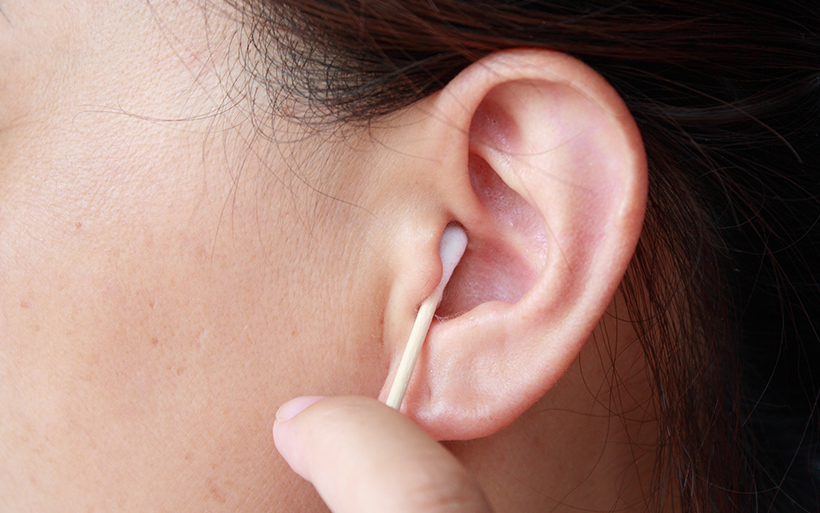
It’s tempting to presume cerumen is the culprit — and reach for cotton swabs or over-the-counter treatments. Unfortunately, these can push wax deeper and exacerbate the problem.
Based on data from the National Library of Medicine, placing objects into the auditory canal increases the likelihood of blockage and injury.
Postponing a professional evaluation for real hearing loss can result in losing out on treatments that protect your future cognitive and communal well-being.
How a Professional Evaluation Helps
A simple ear exam can quickly determine if earwax is blocking the canal.
If wax is found, safe removal often clears symptoms immediately.
When the canal is unobstructed but sound is still muted, a diagnostic test is required to audit your hearing integrity.
Clinicians urge an immediate hearing check if you find yourself failing to communicate or manage your surroundings.
Choosing the Right Path for Improved Hearing
Dampened auditory input doesn’t necessarily indicate permanent damage.
In numerous cases, cerumen accumulation is the source, and it’s extremely treatable.
A clinical assessment will give you the clarity you need to advance without concern.
Remember: The sole accurate way to distinguish the difference between earwax buildup and auditory impairment is with a professional exam.
Addressing the concern immediately stops the stress of the uncertainty and puts you on the track to better hearing.
If you’ve observed a shift in your hearing, reach out to our office for a professional evaluation today.
